Drains and toilets · Naples and Campania
Toilet leaking water from underneath: what to do
A puddle at the base of the toilet can come from three places: the cistern, the pipe bringing the water, or the drain. Knowing which matters, because in the last case it is dirty water and can reach the neighbour below. On a video call we do the tests with you to tell them apart.
From €100 + VAT about 1 hourFloat, button or flush mechanism
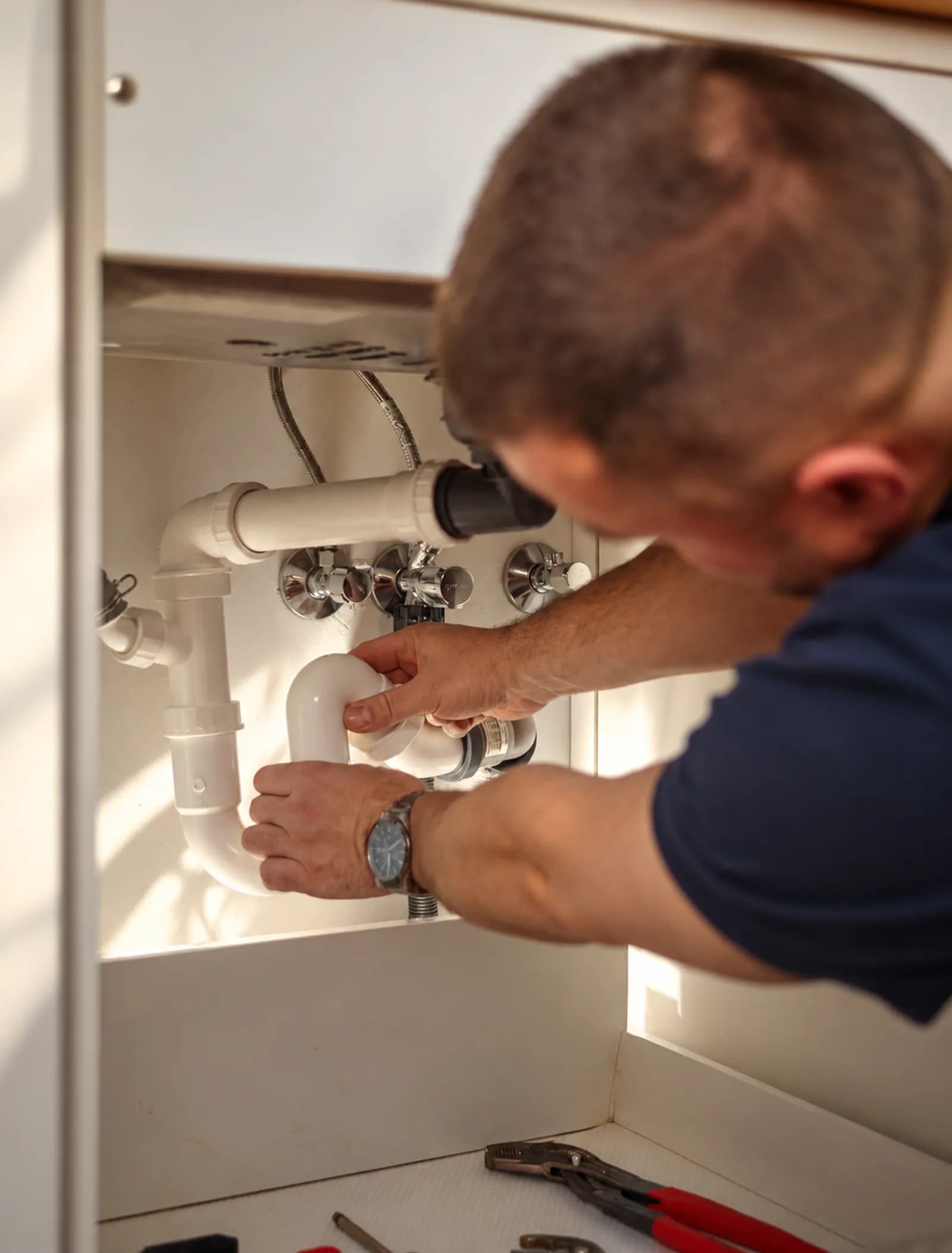
Recognise the problem
- A puddle at the base of the bowl after flushing
- The floor behind the toilet is always damp, even if unused
- Drops running from the exposed cistern, especially in summer
- The silicone at the base of the toilet is blackened or peeling
- The wall-hung toilet leaks towards the wall or the neighbour below has a stain
- A bad smell at the base of the bowl
The most common causes
- 1
Seal between bowl and drain
The toilet connects to the drain with a rubber sleeve or bend. If it hardens, shifts or the bowl moves, a little water escapes at the base with every flush. It is the typical cause when the puddle appears only after the flush.
- 2
Cistern supply
The flexible hose or isolation valve that brings water to the cistern may drip constantly. Here the water is clean and forms even without using the toilet.
- 3
Seal between cistern and bowl
In toilets with the cistern sitting on the bowl, there is a seal between the two, held by two bolts. When it fails, water runs down the back of the bowl at every flush.
- 4
Condensation
In summer, with the humidity of Naples, the cold water in an exposed cistern makes air condense on the ceramic: the cistern sweats and drips on the floor. It is not a fault, even though it leaves a puddle.
- 5
Built-in cistern or drain in the wall
In a wall-hung toilet the cistern and fittings are inside the wall. A leak there is not visible, but wets the wall or the ceiling of the floor below.
What you can safely check yourself
- Dry the floor and the base of the bowl thoroughly, then lay a ring of toilet paper all round: it shows you where and when the water appears.
- Put a little food colouring in the cistern without flushing. If the paper is stained with colour before flushing, the cistern leaks; if it gets wet only after the flush, the problem is towards the drain.
- On a hot day touch the exposed cistern: if it is cold and wet all over, it is condensation.
- Run a sheet of kitchen paper over the cistern's flexible hose and isolation valve to see if they drip.
- If water comes out after flushing, do not use that toilet until it is repaired and clean up with gloves and disinfectant: it is waste water.
Never open the boiler or the gas water heater, and always switch off the power before touching an electrical appliance. If in doubt, call us.
When you need a technician at home
- The seal between bowl and drain must be replaced and the toilet taken off
- The wall-hung toilet leaks and the cistern or the fittings in the wall must be reached
- There is a stain on the ceiling of the floor below
- The bowl is cracked or moves on the floor
How much it costs
Toilet cistern and float (our price)
Float, button or flush mechanism
from €100 + VAT
Major toilet repair
Indicative reference from price lists in the Naples area; the exact price once we know where it leaks from
about 140 €
Market figures are indicative for the Naples area. You know our exact price before we start; prices apply near our base in Parete, and further away you see them in full when you choose your town.
Toilet leaking at the base: working out where from
The question that matters is when the water appears. If it is always there, even at night, it comes from the supply: hose, isolation valve or cistern. If it comes only after flushing, it comes from the path of the water going away: the seal between cistern and bowl or the connection to the drain.
The silicone around the base is not a seal: it is there to finish the job and keep things clean. Filling a leaking base with silicone hides the problem, and the water ends up under the tiles instead of on the floor.
Your nose helps too: a base that smells of sewage, with little visible water, almost always points to a faulty seal towards the drain.
Wall-hung toilet leaking water
In a wall-hung toilet the bowl is fixed to the wall and behind it there is a frame with the cistern and drain. A small leak between bowl and wall shows as water running from the rear edge. A leak inside the wall, instead, shows up as damp on the floor or on the neighbour's ceiling.
By removing the button plate you can look inside the built-in cistern. If it is dry in there, the rubber sleeves connecting the bowl to the drain and the water are suspected: they are changed by taking off the toilet, which is fixed with two studs.
If water has reached the floor below, close the cistern's isolation valve and, if you can, use another bathroom. A drain leak inside the wall will not improve by itself.
Want to know what it is first? Show us
On a video call we ask you to dry everything and watch with you when the water reappears: always, only after flushing, or only on humid days. With the colouring test we separate the cistern from the drain. If it is the seal between bowl and drain, we tell you what the visit will need.
Video consultation, up to 15 minutes: €9.90 (€14.90 on Sundays), deducted from the bill if we then come to your home.
Book the consultationDIY guides
Frequently asked questions
The toilet leaks from underneath only when I flush: what is it?
Almost always it is the seal between bowl and drain, or the seal between cistern and bowl in models with the cistern sitting on top. The colouring test and the paper around the base help tell the two cases apart.
Can I fix it with silicone?
No, silicone does not stop a drain leak: it hides it, and the water keeps running under the floor. The seal or the sleeve must be replaced, and to do that the bowl is taken off.
Why does the toilet cistern drip in summer?
It is condensation: the cold water in the cistern cools the ceramic and the humidity in the air settles on it. Airing the bathroom helps. If it drips in winter too, check the hose and fittings.
My toilet leaks and the neighbour has a stain on the ceiling: what do I do?
Stop using that toilet, close the isolation valve and tell your neighbour. Then have the seal redone before the damage spreads. If you have home insurance, keep photos and the invoice.
How much does it cost to repair a leaking toilet in Naples?
A major repair, such as redoing the seal by taking off the bowl, is around 140 € on local price lists. If it is a hose or a cistern seal the cost is lower, and sometimes the video call is enough.
You may also be interested in
Drains and toilets all over Campania
We work in Naples, Posillipo, Caserta and all over the region. Near our base in Parete there is no travel cost; further away you see the full price before you confirm.
Ready when you need us.
Book your visit by choosing a day and time. For emergencies we answer 24 hours a day, across Campania.