Radiators · Naples and Campania
Cold radiators but the boiler works: what to do
The boiler is on, hot water arrives in the bathroom, but one or more radiators stay cold. Where they are cold, top or bottom, and how many there are, already says a lot about the cause. Often a good bleed and a freed valve are enough.
Quote before we start about 1 hourBleeding, valves, leaks, balancing
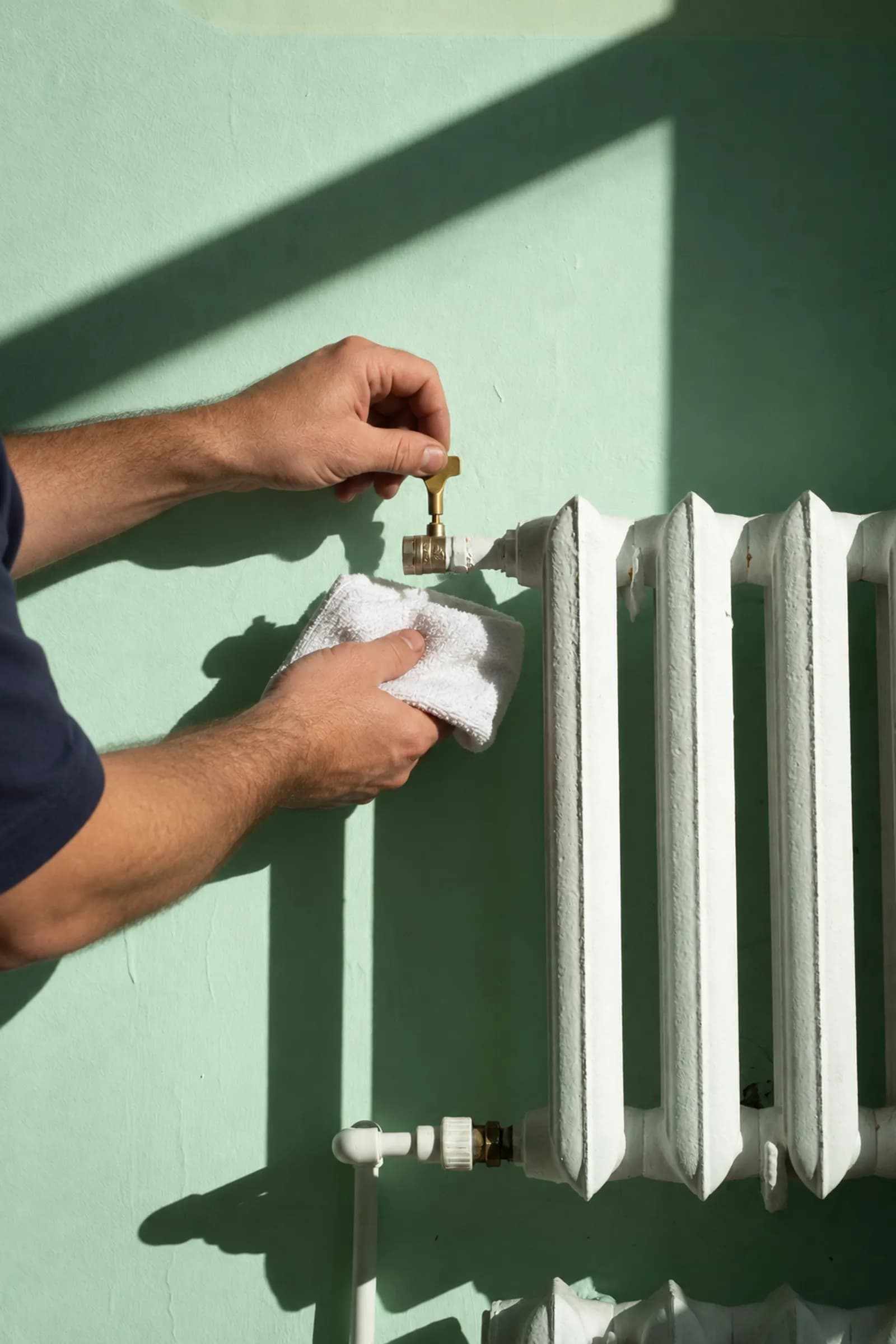
Bleeding is done on the radiators, never on the boiler: if it is gas-fired, do not open it or touch its internal parts. The water coming out of the small valve can be very hot, so wait for the system to cool a little.
Recognise the problem
- The radiator is warm at the bottom and cold at the top
- The radiator is warm at the top and cold at the bottom
- Only the ones furthest from the boiler stay lukewarm
- All the radiators are cold but there is hot water in the bathroom
- You hear water running or gurgling in the pipes
- The radiator leaks water from a valve
The most common causes
- 1
Air at the top of the radiator
Air rises and fills the upper part: that is why the radiator is cold at the top and warm at the bottom. Bleeding removes it.
- 2
Sludge at the bottom
If it is cold at the bottom and warm at the top, rust, limescale and dirt have often settled at the bottom and slow the water. The radiator or the system needs flushing.
- 3
Stuck thermostatic valve
After summer the pin under the thermostatic head can stay stuck in the closed position. The radiator stays cold even with the knob at maximum.
- 4
Unbalanced system
Hot water follows the easiest path and heats the radiators near the boiler first. The distant ones need help by adjusting the lockshield valves, on the other side of the radiator.
- 5
Problem inside the boiler
If all are cold but the domestic hot water works, the diverter valve, which sends hot water either to the radiators or to the taps, may be stuck, or the circulator, the pump that pushes water around the system.
What you can safely check yourself
- Check that the boiler is in winter mode and that the room thermostat is set higher than the house temperature.
- Open the cold radiator's valve fully, turning the knob towards the highest number.
- To bleed, switch off the heating and wait until the radiators are lukewarm, then put a cloth under the small valve at the top and open it slowly with the key or a screwdriver.
- When air stops coming out and water arrives, close it again. Repeat on every radiator.
- At the end look at the boiler pressure gauge and, if the pressure has dropped below the manual's value, bring it back up with the filling tap.
Never open the boiler or the gas water heater, and always switch off the power before touching an electrical appliance. If in doubt, call us.
When you need a technician at home
- Radiators cold at the bottom, a sign of sludge to flush
- Thermostatic valve that will not free up or leaks
- Radiator leaking water from the body, the valve or the fittings
- All radiators cold with the boiler making only domestic hot water
- Pressure that drops again in the days after bleeding
Cold at the top or cold at the bottom: the difference matters
Cold at the top and warm at the bottom is the classic air case. It is fixed by bleeding, and after a few minutes you feel the heat rise to the top.
Cold at the bottom and warm at the top is a different matter. Usually sludge has built up at the bottom of the radiator: bleeding does not help, and the radiator has to be removed and flushed, or the system flushed with a suitable product.
A radiator slightly less hot at the bottom than at the top, on the other hand, is normal: the water cools as it gives up heat to the room. The warning sign is a bottom section that is completely cold.
The thermostatic valve after summer
Thermostatic valves close by themselves when the room is warm. After months idle the internal pin, a small metal rod under the knob, can stay stuck down.
Often it is enough to remove the thermostatic head and gently move the pin until it comes back up. On a video call we show you how to do it on your model without forcing. If the pin does not move, or the valve drips, it must be replaced.
If the radiator leaks water from under the knob, the cause is often the packing gland, the small seal around the valve stem. For a technician it is a quick job, but it must be done with the system made safe.
Want to know what it is first? Show us
We ask you to touch the radiators and tell us where they are cold, then we look together at the valves and the boiler pressure gauge. We guide you through bleeding and, if needed, freeing the thermostatic valve and topping up the pressure. If the fault is in the boiler or the system, we explain what is needed.
Video consultation, up to 15 minutes: €9.90 (€14.90 on Sundays), deducted from the bill if we then come to your home.
Book the consultationDIY guides
Frequently asked questions
How do you bleed a radiator?
With the heating off and the radiators lukewarm, slowly open the small valve at the top with the key or a screwdriver, holding a cloth underneath. First air comes out with a hiss, then water: at that point close it. When you have done the round, check the boiler pressure.
Why is the radiator cold at the bottom and hot at the top?
Most often sludge has settled at the bottom and slows the water, and bleeding does not help. The radiator or the system needs flushing, a job to do with a technician.
After bleeding the boiler shows low pressure: is that normal?
Yes, a little water leaves with the air and the pressure falls. Bring it back to the value in the manual with the filling tap. If it drops again in the following days, there is a leak or a problem with the expansion vessel.
The radiator is leaking water: what do I do right away?
Put a container underneath and close that radiator's valve and lockshield, if you can turn them without forcing. Then photograph the exact spot the water comes from. If it drips from the body of the radiator, it usually needs replacing.
Why do only the furthest radiators stay cold?
The system is probably unbalanced and the water heats the ones near the boiler first. It is solved by adjusting the lockshield valves, closing the nearer ones a little. Do it patiently, checking temperatures room by room.
You may also be interested in
Radiators all over Campania
We work in Naples, Posillipo, Caserta and all over the region. Near our base in Parete there is no travel cost; further away you see the full price before you confirm.
Ready when you need us.
Book your visit by choosing a day and time. For emergencies we answer 24 hours a day, across Campania.