Pellet stove · Naples and Campania
Pellet stove in alarm: what it means and what to do
An alarm is the way the stove protects itself: a sensor has seen something out of place and the board has stopped the pellet feed. Codes change from brand to brand, but the causes repeat: failed ignition, poor draught, too high a temperature, a faulty sensor.
Quote before we start about 1 hour 30 minutesFull cleaning of the stove and a check of the flue
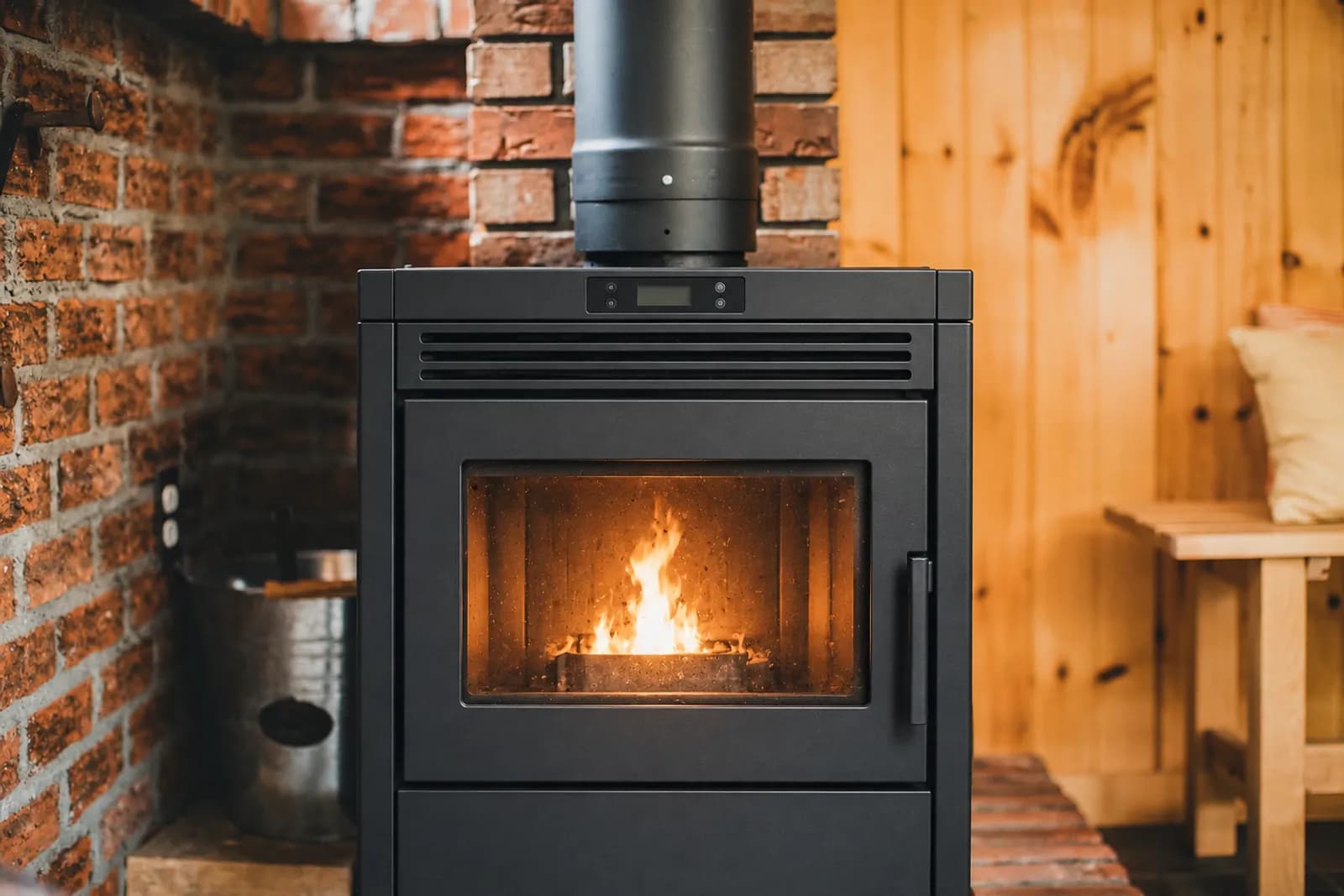
A blocked-outlet alarm with a smell of smoke in the house is to be taken seriously: stove fumes contain carbon monoxide. Switch off from the panel leaving the plug in, so the fan empties the combustion chamber, then throw the windows open and leave. With headache, nausea or drowsiness call 112.
Recognise the problem
- A string of letters and numbers flashes on the display
- The stove switches itself off and shows an alarm message
- The alarm appears on days of strong wind
- It goes into alarm after a few hours at maximum power
- You hear a beep and the flame drops until it goes out
The most common causes
- 1
Failed ignition
The stove loaded pellet but the flue gas probe did not register the temperature rise in the expected time. Behind it there is usually a dirty burn pot, damp pellet or a glow plug to replace.
- 2
Insufficient draught
The pressure switch checks that the flue gas fan creates enough suction in the outlet. It trips because of a dirty or blocked flue, a door that does not close, the wind, or its small tube full of ash.
- 3
Overtemperature
The alarm for flue gases that are too hot, read by the probe, trips, or the stove's safety thermostat does. Typical causes are a stopped room fan, a heat exchanger full of ash, too high a pellet load or a blackout with the stove on.
- 4
Flue gas probe faulty or disconnected
The probe is a temperature sensor inserted in the flue gas duct. If it breaks or disconnects, the stove no longer knows what is happening in the combustion and goes into alarm even when cold.
- 5
Flue gas fan or board
If the flue gas fan stops, the board cuts the pellet immediately. A blown fuse or a board damaged by a voltage surge gives similar signals.
What you can safely check yourself
- Look up the code in your model's manual, under alarms: there you also find how to reset it.
- With the stove cold and the power off, clean the burn pot and check that the door closes and the gaskets are intact.
- If the manual says so, open the T-connector cap behind the stove and remove the accumulated ash.
- Look at the chimney cap from the street or the balcony: a nest or a crooked cap are signs of a blockage.
- Reset the alarm only once. If it returns, leave the stove off.
Never open the boiler or the gas water heater, and always switch off the power before touching an electrical appliance. If in doubt, call us.
When you need a technician at home
- The draught alarm returns even with a clean burn pot and T-connector
- The safety thermostat trips more than once
- The stove reports a fault of the probe or the flue gas fan
- The alarm comes together with smoke in the room
- The code is not in the manual, or the manual has been lost
How much it costs
Diagnosis and repair after an alarm
ProntoPro range for pellet stove repairs; the part to be replaced makes the difference
60-250 €
Flue cleaning
ProntoPro 2026 quotes, alone or together with cleaning the stove
85-180 €
Market figures are indicative for the Naples area. You know our exact price before we start; prices apply near our base in Parete, and further away you see them in full when you choose your town.
Codes change from brand to brand: an example
There is no table valid for all stoves: each manufacturer uses its own codes, and the same code on two brands can mean different things. That is why we start from your model's manual, not from codes found on forums.
To give you an idea, in the user manual of the Cadel Piko and Elliot stoves the alarms run from AL 1 to AL 8: AL 1 is the blackout, AL 2 the flue gas probe, AL 3 flue gases too hot, AL 4 flue gas fan fault, AL 5 failed ignition, AL 6 pellet finished, AL 7 thermal safety, AL 8 lack of draught. On other brands the same situations have different codes.
The same manual states a principle that holds almost everywhere: after the reset the stove rechecks the cause, and if the alarm comes back a technician is needed.
The draught alarm and the flue
It is a typical alarm on stoves that have skipped cleaning: when ash and soot narrow the outlet, suction drops and the pressure switch stops everything.
The causes are almost always outside the stove: T-connector full of ash, dirty flue, blocked chimney cap, horizontal runs that are too long.
With a draught alarm do not keep resetting: if the outlet is blocked, the fumes can come back into the room. First the flue is cleaned or checked, then the stove is relit.
Overheating: when the safety trips
Many stoves have a manual-reset safety thermostat, usually a button on the back under a cap, which stops the pellet when the temperature goes over the threshold. The manual says whether you can reset it yourself, usually with the stove cold.
If it trips once after a blackout with the stove on, it may be an isolated event. If it repeats, the stove is running too hot, for example with the duct vents closed, and needs checking.
Want to know what it is first? Show us
You show us the code on the display and the model's data plate, and we read it in the manufacturer's manual. We guide you through the safe checks and work out whether the alarm comes from the stove or from the flue. If a sensor needs measuring, the home visit starts from there.
Video consultation, up to 15 minutes: €9.90 (€14.90 on Sundays), deducted from the bill if we then come to your home.
Book the consultationDIY guides
Frequently asked questions
What does a draught alarm mean on a pellet stove?
The pressure switch does not detect enough suction in the flue gas outlet, usually because of a dirty flue or T-connector, an open door or damaged gaskets. If its small tube is full of ash, the sensor reads wrongly even with a clean outlet.
How do I reset the pellet stove alarm?
Each model has its own procedure, often just holding a button for a few seconds: you find it in the manual. After the reset the stove checks whether the cause is still there. If the alarm returns, do not repeat the operation several times.
Why does the stove go into alarm only when it is windy?
Wind blowing against the chimney cap can obstruct the flue gases and trip the pressure switch. If it happens often, the chimney cap may be in the backflow zone, that is too close to the roof ridge or to an obstacle, and its position needs reviewing.
Can I keep using the stove if it often goes into alarm?
Better not. A repeated alarm points to a problem with draught, combustion or sensors, and continuing to reset it only hides it.
You may also be interested in
Pellet stove all over Campania
We work in Naples, Posillipo, Caserta and all over the region. Near our base in Parete there is no travel cost; further away you see the full price before you confirm.
Ready when you need us.
Book your visit by choosing a day and time. For emergencies we answer 24 hours a day, across Campania.